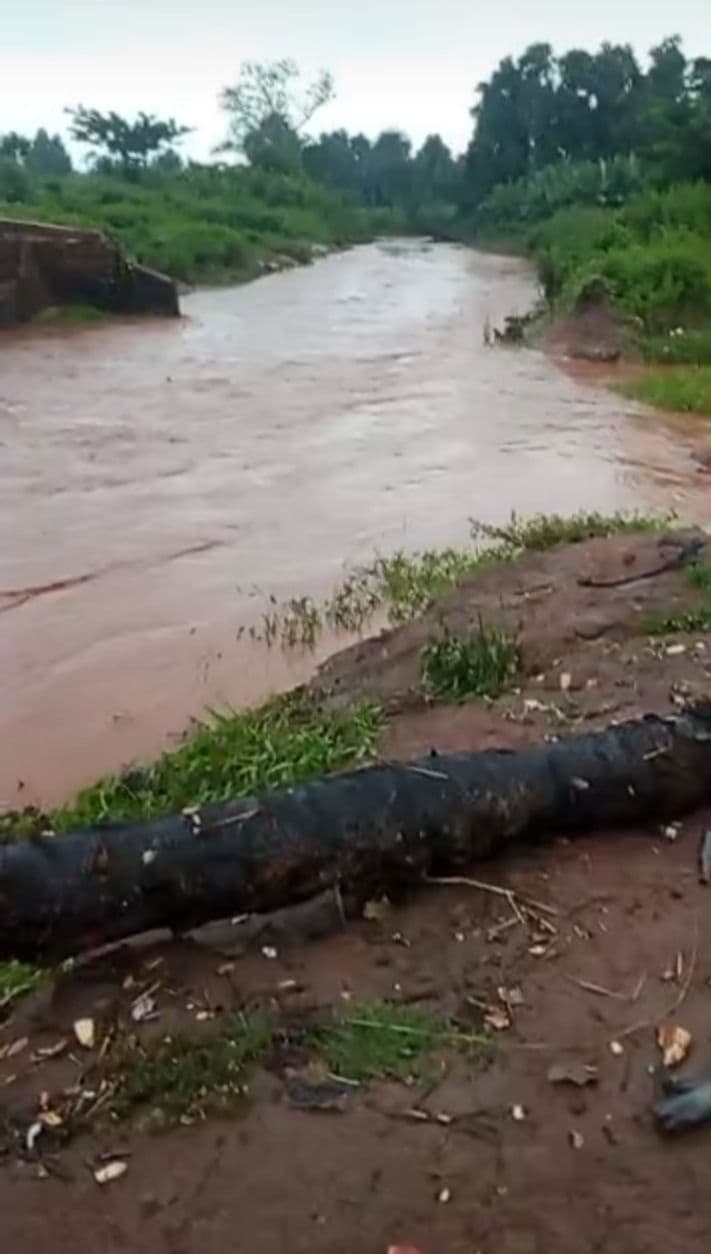
Another heavy downpour has completely washed away the wooden bridge linking the ancient Rabba community with Mokwa, the headquarters of Mokwa Local Government Area of Niger State.
The wooden bridge was constructed and reconstructed several times through community efforts following the destruction of the original concrete bridge during the devastating Mokwa flood, which claimed hundreds of lives and destroyed properties worth billions of naira.
The latest incident has left the Rabba community effectively cut off from Mokwa and neighbouring communities, as the wooden bridge served as the only major access route connecting residents to essential social and economic activities.
The bridge provided access to farms, schools, healthcare facilities, markets and other socio-economic centres, making its destruction a serious concern for residents and surrounding communities.
The situation has also raised fears over the safety and wellbeing of the people, particularly during emergencies, as Rabba is geographically surrounded by water, with the River Niger on one side and River Dingi on the other, where the washed-away bridge was constructed.
With the bridge now completely destroyed, residents and farmers face serious difficulties accessing essential services, transporting farm produce and moving between Rabba and Mokwa.
Community members have therefore appealed to the Niger State Government for urgent intervention to reconstruct a permanent and durable bridge capable of withstanding future flooding.
They noted that repeated reconstruction of the wooden bridge through community efforts had exhausted their resources and was no longer a sustainable solution to the longstanding access challenge.
The community appealed to the government to treat the reconstruction of the Rabba bridge as an emergency, stressing that a permanent solution would restore access, protect livelihoods and reconnect the people of Rabba with Mokwa and other parts of the local government.
By Ismaila Musa
RABBA BRIDGE WASHED AWAY AGAIN, COMMUNITY CRIES FOR URGENT GOVERNMENT INTERVENTION
A
BY Aisha Muhammed kuduPublished September 16, 2026