
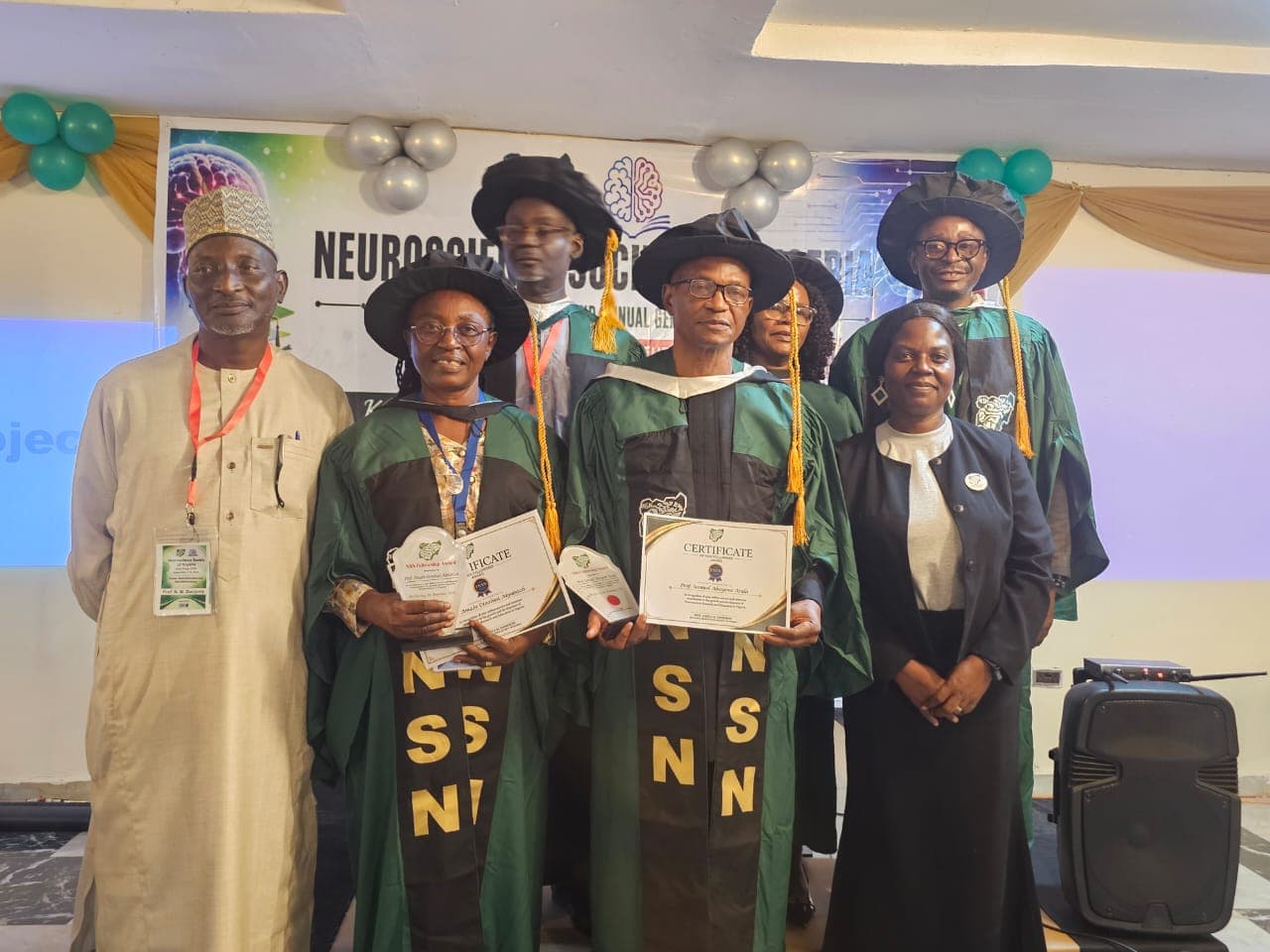
Africa contributes less than one per cent of dementia research despite projections that dementia cases in West Africa could rise by about 348 per cent over the next 25 years, a Nigerian neuroscientist, Professor Mahmoud Bukar Maina, has warned.
Maina gave the warning while delivering the keynote address at the 23rd Scientific Conference and Annual General Meeting of the Neuroscience Society of Nigeria in Abuja.
He said the mismatch between the projected increase in dementia and the volume of research being produced on the continent means African countries could be inadequately prepared for the coming burden.
“Up to 2022, only about 1% of dementia research, in fact, even probably not up to that, less than 1% of dementia research has come from Africa,” he said.
Maina, who is Director of the Biomedical Science Research and Training Centre at Yobe State University, said Africa’s high genetic diversity makes the lack of locally generated dementia research particularly concerning.
“We are saying this is a continent that has high genetic diversity, we are saying that this is a continent where dementia is going to increase by over 300% in many places, but yet, less than or about just 1% of dementia research is coming from the continent,” he said.
“That means we are not prepared to tackle this challenge that is about to hit us in the next 25 years.”
Maina, who is also the Special Adviser to the Yobe State Governor on Science Innovation and Research said the research deficit goes beyond dementia and could affect how medicines are developed and prescribed for African populations.
According to him, drugs developed without adequate testing in African populations may not fully account for how those populations respond to the medicines.
“Often times, the side effect, you know, is because when the drug was being developed, from the preclinical level to the clinical level, it has never been tested in our own people. So we are consumers, instead of us driving our own needs.”
He said his research programme is attempting to generate African-specific evidence on dementia by developing a cohort of people living with the condition and examining genetic factors, biomarkers and other characteristics that may influence disease risk and progression.
His team is also using induced pluripotent stem-cell technology to grow brain cells in the laboratory from cells obtained from research participants.
The approach, he explained, could enable researchers to investigate how dementia develops and potentially identify risk before the condition manifests.
“But importantly, we believe that what we are doing is not local. What we try to do is, we now try to compare our findings with findings from Europe, North America, and other places, so that at the end of the day, we will contribute to global understanding,” Maina said.
Maina identified funding as the most significant constraint facing neuroscience research in Nigeria.
“Funding is the biggest, biggest challenge,” he said, adding that inadequate financing affects the ability of researchers to acquire equipment, purchase consumables and access facilities that may not be available locally.
He also identified lack of equipment, insufficient collaboration between disciplines and weak public engagement with research as other challenges.
Maina urged government, philanthropists and communities to increase support for brain research.
He said investment in brain health should be viewed as an economic investment because a population with healthy brains is better positioned to contribute to economic development.
“If your population is healthy and they can think and do things well, you are going to have more people that contribute positively to your economy,” he said.
Justina Asishana, Minna